Learning the Hail Mary is an important moment in a child's faith journey. But repeating the words is only the beginning.
How can we help children connect this beautiful prayer with kindness, gratitude, forgiveness, and love?
The answer can be surprisingly simple: through everyday experiences.
These five Hail Mary activities for kids combine prayer, creativity, conversation, and small acts of kindness. They require very few materials and can be enjoyed at home, in religious education classes, or during family prayer time.
Each activity helps children explore one meaningful part of the prayer and put its message into practise.
New to teaching this prayer? Start with our line-by-line Hail Mary guide, then choose an activity below.
1. The One-Line Prayer Jar
Best for: Ages 4–9
Time needed: 5–10 minutes
What You'll Need
- A small jar or container
- Eight small pieces of paper
- Coloured pencils or markers
How to Do It
Write one of the following phrases from the Hail Mary on each piece of paper:
- Hail Mary, full of grace
- The Lord is with thee
- Blessed art thou among women
- And blessed is the fruit of thy womb, Jesus
- Holy Mary, Mother of God
- Pray for us sinners
- Now and at the hour of our death
- Amen
Fold the papers and place them inside the jar.
Each evening, invite your child to pick one paper.
Read the phrase together, explain its meaning in simple words, and ask your child how it connects to everyday life.
For example, if your child picks "The Lord is with thee," talk about how God's loving presence can give us courage when we feel nervous or afraid.
If your child chooses “Now and at the hour of our death,” explain gently that we ask Mary to pray for us throughout our lives and when we die. Welcome their questions and keep the conversation reassuring.
Finish by praying the Hail Mary together.
A Question to Ask Your Child
"When do you especially need to remember that God loves you?"
What Children Learn
Prayer can become a moment of reflection instead of something repeated without thought.
Family tip: Keep the jar near your child's bed or family prayer space so it becomes part of a gentle evening routine.
2. Draw Mary Saying Yes to God
Best for: Ages 5–10
Time needed: 15–20 minutes
The Bible tells us that the angel Gabriel visited Mary with wonderful news: she would become the mother of Jesus.
Mary trusted God and accepted His plan.
This activity helps children explore trust, courage, and faith through drawing.
What You'll Need
- White paper
- Crayons or coloured pencils
- A children's Bible, if available
How to Do It
Read or retell Luke 1:26–38, the story of the Annunciation.
Then invite your child to draw the moment the angel Gabriel visits Mary.
Encourage them to include Mary, Gabriel, and details from their imagination.
When the drawing is finished, ask:
"How do you think Mary felt when she heard the angel's message?"
Maybe she felt surprised, curious, or even afraid.
Explain that being brave doesn't always mean feeling fearless. Sometimes it means trusting God and choosing what is right even when something feels difficult.
On the bottom of the drawing, write:
"Like Mary, I Can Say Yes to God."
Then invite your child to draw or write one loving choice they can make this week.
It might be helping a sibling, telling the truth, welcoming a new friend, or sharing something they enjoy.
A Question to Ask Your Child
"What is one good thing you can say yes to today?"
What Children Learn
Mary's faith was expressed through trust and action. Children can begin practising those values through small, loving choices.
3. Make a Kindness Flower for Mary
Best for: Ages 4–10
Time needed: 15 minutes to create, then a week to complete
Flowers have long been associated with honouring Mary in Catholic tradition.
In this activity, each flower petal represents a simple act of kindness.
What You'll Need
- Coloured paper
- A pencil
- Scissors, with adult supervision
- Glue
- A large sheet of paper
How to Do It
Cut out seven paper petals and a centre circle, with adult help as needed. Glue them onto a large sheet to make a flower, leaving the petals blank for your child’s drawings or words.
In the centre, write:
"Growing in Love With Jesus."
Leave the petals blank.
Explain that Catholics honour Mary because she is the mother of Jesus and an example of faith and love.
Then tell your child:
"Every time we make a loving choice, we can remember Mary's example and try to follow Jesus."
Over the next seven days, invite your child to write or draw one act of kindness on a petal.
Here are some ideas:
- Help someone without being asked.
- Share a favourite toy.
- Say something encouraging.
- Include someone who feels left out.
- Pray for someone who is having a difficult day.
- Thank a family member for something they do.
- Apologise and make things right after choosing to be unkind.
Remember that accidentally spilling a drink or making an ordinary mistake is not the same as deliberately choosing to do something wrong.
The goal is to help children recognise loving choices, not make them feel guilty about accidents.
There is no need to fill every petal perfectly. This is a way to notice kindness, not a scorecard.
At the end of the week, look at the completed flower together and pray the Hail Mary.
A Question to Ask Your Child
"Which act of kindness made someone smile this week?"
What Children Learn
Honoring Mary can inspire us to follow Jesus by choosing kindness and caring for others.
4. The Family Prayer Circle: Learning to Pray for Others
Best for: Ages 5–10
Time needed: 5–10 minutes
One of the most meaningful lines of the Hail Mary is:
"Pray for us sinners."
But what does it mean to ask someone to pray for us?
This activity introduces children to a word that may sound complicated: intercession.
Intercession simply means praying for someone else.
What You'll Need
- A quiet place
- A few minutes together
- Optional: a small paper heart for each family member
How to Do It
Invite your family to sit together in a circle.
Begin by explaining:
"When someone we love needs help, we can pray to God for them. That's called intercession."
Ask each family member to think of someone they would like to pray for. If you are using paper hearts, invite children to draw that person or write their first name on a heart. They can keep it private if they prefer.
It could be a sick grandparent, a friend who is sad, or someone who feels lonely.
Take turns naming the person, if everyone feels comfortable, and say a short prayer.
For example:
"Dear God, please help our friend feel Your love and comfort today. Amen."
Then explain:
"Catholics believe that Mary, who is with Jesus in Heaven, also prays for us. When we ask Mary to pray for us, we are asking for her intercession. We worship God alone."
Finish by praying the Hail Mary together.
A Question to Ask Your Child
"Who could use a little extra love and prayer today?"
What Children Learn
Prayer is not only about asking for things for ourselves. It can also be an act of love for others.
Family tip: After praying, ask whether there is a practical way to help the person, such as writing a card or offering a kind word.
5. Create a Hail Mary Bedtime Gratitude Routine
Best for: Ages 4–10
Time needed: 5 minutes
Bedtime can be a peaceful opportunity to help children reflect on their day and build a habit of prayer.
This simple routine combines gratitude, reflection, and the Hail Mary.
What You'll Need
Nothing more than a quiet moment together.
How to Do It
Before bedtime, sit beside your child and invite them to reflect on three things.
First: Something I'm Thankful For
Ask your child to name something good that happened today.
It might be playing with a friend, eating a favourite meal, or receiving a hug.
Second: Someone I Want to Pray For
Encourage your child to think of a person who needs love, encouragement, or help.
Third: One Loving Choice for Tomorrow
Invite your child to choose one kind thing they'd like to do the following day.
Perhaps they want to help a teacher, be patient with a sibling, or invite a classmate to play.
Then pray the Hail Mary together.
If your child is still learning the words, take turns saying short sections.
Finish with a warm goodnight.
A Question to Ask Your Child
"What is one way you would like to share God's love tomorrow?"
What Children Learn
Prayer can become a natural part of daily life, helping children practise gratitude, compassion, and thoughtful choices.
How to Make Hail Mary Activities Meaningful for Children
Children learn at different ages and in different ways.
Some enjoy drawing and colouring. Others prefer asking questions, listening to stories, or participating in family conversations.
There is no need to complete all five activities in one day.
Choose one that fits your child's interests and age.
Keep explanations short, welcome questions, and allow plenty of room for creativity.
Most importantly, remember that learning about prayer should be a loving experience rather than a test of memory.
For younger children, one sentence and one simple action may be enough.
Older children may be ready to discuss Mary's role in the Bible, the meaning of intercession, and the difference between honouring Mary and worshiping God.
If your child asks about a phrase they don't understand, explore it together.
For a detailed explanation of the prayer's words, read our companion guide, How to Explain the Hail Mary Prayer to Children, Line by Line.
Frequently Asked Questions About Hail Mary Activities for Kids
How can I make learning the Hail Mary fun for children?
Use activities such as drawing, prayer jars, paper crafts, storytelling, and short family prayer routines. Connect the words of the prayer with experiences children already understand.
What is a good Hail Mary activity for preschoolers?
Drawing Mary, decorating a paper flower, or repeating one short phrase at a time can work well for preschool-aged children. Keep activities brief and provide adult help when needed.
How can I teach the Hail Mary at home?
Begin with a simple explanation of who Mary is and why Catholics honour her. Pray together slowly, invite questions, and choose short activities that connect faith with everyday life.
What does "pray for us" mean in the Hail Mary?
Catholics ask Mary to intercede for them, meaning to pray on their behalf. Catholics worship God alone and believe Mary helps lead them closer to Jesus.
Can I use these activities in Sunday school?
Yes. These activities can be adapted for Catholic religious education, children's prayer groups, and family faith formation. Adjust the explanations and materials to suit the children's ages.
Explore the Prayer Through a Story
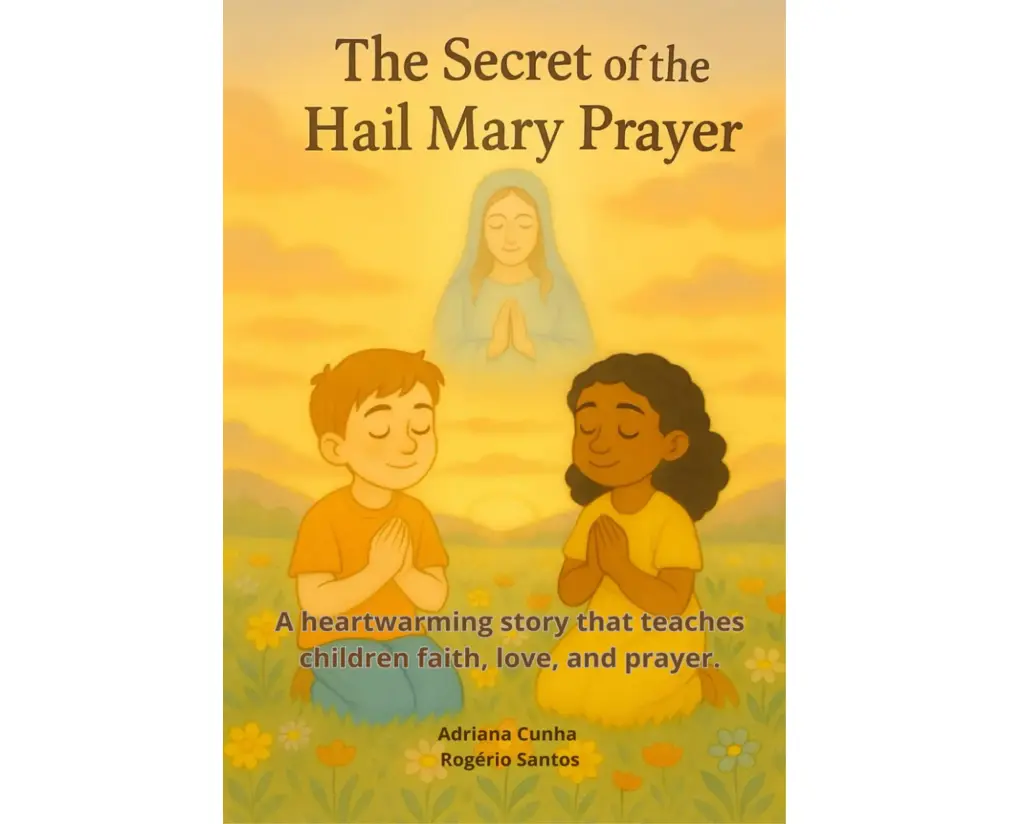
The Secret of the Hail Mary Prayer
An illustrated introduction to the Hail Mary for children ages 4–10, by Adriana Cunha and Rogério Santos.
Pair a shared reading with one of the activities above, leaving time for your child’s questions.
Explore the BookOne Small Activity, One Meaningful Moment
Helping children grow in faith doesn't have to be complicated.
Choose one activity that your child will enjoy, share a meaningful conversation, and pray together.
Tonight, choose one simple activity and let it become a moment of prayer, kindness, and connection.