“What does ‘hallowed’ mean?” “Why do we ask God for bread?” “What is a trespass?”
Children often learn the Lord’s Prayer before they understand its words. Taking one phrase at a time can help them connect a familiar prayer with their own questions, needs, and relationships.
You do not need to turn family prayer into a lesson every evening. Choose one line, talk about it briefly, and pray together. This guide gives you a place to begin.
What Is the Lord’s Prayer?
The Lord’s Prayer, also called the Our Father, is the prayer Jesus taught His followers.
You can find it in Matthew 6:9–13 and, in a shorter form, Luke 11:2–4. In Luke’s account, one of Jesus’ disciples asks Him to teach them to pray.
The prayer begins by turning our attention to God: His name, His Kingdom, and His will. It then brings our needs before Him, including food, forgiveness, guidance, and protection.
For a young child, you could say:
“Jesus gave us this prayer to help us talk to God. We praise God, ask for what we need, and ask Him to help us live with love.”
1. “Our Father, who art in heaven”
What does it mean?
Jesus teaches us to approach God as a loving Father.
The word “our” matters. We pray as members of a family, remembering other people as well as ourselves.
“Who art” means “who is.” Calling God our Father “in heaven” does not mean He is far away or unable to hear us. We can turn to Him wherever we are.
Explain it to your child
“God is our loving Father. He knows us and cares about us. We can tell Him about our day, and we remember that He loves other people too.”
Try an everyday example
At bedtime, invite your child to share one happy moment and one difficult moment from the day. Help them turn those thoughts into a short prayer.
If the word “father” brings up difficult feelings for your child, listen without forcing a comparison with their family. Explain that God’s love is good and trustworthy, even when people let us down.
Talk about it together
“What would you like to tell God about today?”
2. “Hallowed be Thy name”
What does it mean?
“Hallowed” means holy or honored as holy. “Thy” means “your.”
We are asking that God’s name be honored—in our lives and throughout the world. God is already holy; our prayer does not make Him holy.
Honoring God includes speaking His name respectfully and living in ways that reflect our love for Him.
Explain it to your child
“We are asking that people know and honor God. We want our words and actions to show that we love Him.”
Try an everyday example
When you say a prayer of thanks together, pause to explain that prayer is not only about asking for things. We can also praise God for His goodness.
Talk about it together
“What is something about God that you would like to praise Him for?”
Your child might mention His love, patience, forgiveness, or creation.
3. “Thy Kingdom come”
What does it mean?
God’s Kingdom means God’s reign or rule. Jesus announced and revealed this Kingdom through His life, teaching, death, and resurrection.
When we pray these words, we ask God to bring His Kingdom fully and help us welcome His rule in our lives now.
Acts of kindness, justice, and forgiveness can reflect God’s Kingdom. But the Kingdom is God’s gift, not something we create simply by behaving well.
Explain it to your child
“We ask God to bring His goodness and peace fully into the world. We also ask Him to help us follow Jesus today.”
Try an everyday example
Imagine a child sitting alone while others play. Inviting that child to join is one way to practice the love Jesus teaches.
Explain that this action reflects God’s love without suggesting that one kind act fixes everything.
Talk about it together
“How could we help someone feel welcome this week?”
4. “Thy will be done, on earth as it is in heaven”
What does it mean?
God’s “will” means what He wants: what is good, loving, and right.
We ask for His will to be followed on earth as it is in heaven. We also ask for help to follow Him when doing so is difficult.
This does not mean that everything people do is what God wants. Cruelty and dishonesty go against His ways. Trusting God does not mean accepting mistreatment or staying silent when someone needs help.
Explain it to your child
“We ask God to help us want what is good and do what is right. Sometimes that takes courage, especially when we would rather have everything our own way.”
Try an everyday example
Your child notices that a friend is being left out. Joining the others might feel easier, but including the friend would be kinder.
You can talk about asking God for the courage to make that choice.
Talk about it together
“When have you needed courage to do the right thing?”
5. “Give us this day our daily bread”
What does it mean?
We ask God for the food and other necessities that sustain our lives.
“Daily” reminds us to bring today’s needs to Him. “Us” reminds us to care about other people’s needs too.
Christians also connect this petition with spiritual nourishment: our need for God’s word and life. Catholic families can explore its connection with Jesus, the Bread of Life, and the Eucharist as children grow.
Explain it to your child
“We ask God for what we need today. We thank Him for His gifts and remember people who do not have enough.”
Try an everyday example
Before a meal, thank God for the food and for the people whose work brought it to your table.
Then choose a practical way to share, such as contributing to a food pantry if your family is able.
Avoid suggesting that someone lacks food because they have not prayed enough. This line invites us to care for one another.
Talk about it together
“What do we need today, and what could we share?”
6. “And forgive us our trespasses, as we forgive those who trespass against us”
What does it mean?
In this prayer, “trespasses” means sins: the wrong choices through which we fail to love God and other people.
We ask God to forgive us and help us extend forgiveness to others.
Forgiveness does not mean pretending that hurtful behavior was acceptable. It does not require immediately trusting someone again or allowing them to keep hurting us. Feeling hurt or angry does not mean a child has failed to forgive.
Explain it to your child
“When we choose to do something wrong, we can ask God for forgiveness and try to put things right. When someone hurts us, we can ask God to help us forgive without trying to hurt them back.”
Try an everyday example
Imagine a child deliberately calls a sibling an unkind name during an argument.
They can stop, acknowledge what they said, apologize, and make a different choice next time. The sibling may still need time and space.
An accidental spill or broken toy is different from deliberately hurting someone. Children can help repair an accident without being told that every mistake is a sin.
Talk about it together
“What makes an apology helpful?”
Discuss naming what happened, listening, and making amends. Remind your child to tell a trusted adult if someone is hurting them or making them feel unsafe.
7. “And lead us not into temptation”
What does it mean?
Temptation is the pull toward something wrong. Being tempted is not the same as choosing to do it.
God does not try to make us sin. In this line, we ask Him to guide us away from sin and give us strength when we are tempted.
Explain it to your child
“Sometimes doing something wrong seems easier. We ask God to help us notice that moment, pause, and choose what is right.”
Try an everyday example
Your child has done something they know they should not have done. They feel tempted to blame someone else.
They can pause, ask for help, and tell the truth. Make it clear that they can speak honestly to you even when the conversation is difficult.
Talk about it together
“What could help you tell the truth when you feel afraid?”
8. “But deliver us from evil”
What does it mean?
“Deliver us” means rescue us or set us free.
We ask God to protect us from evil and its power, and to keep us close to Him. In Catholic teaching, this includes asking for protection from the Evil One.
With young children, keep the explanation calm and centered on trust in God. There is no need for frightening imagery.
Prayer also goes alongside practical action. Asking God for protection does not mean that nothing difficult will ever happen or that we should ignore danger.
Explain it to your child
“We ask God to protect us from evil and help us stay close to what is good. If something frightens or hurts us, we can pray and ask a trusted adult for help.”
Try an everyday example
If your child sees or hears something upsetting, listen to what happened. Help them take any necessary steps to feel safe, then offer a short prayer together.
Talk about it together
“Which adults can you talk to if you need help?”
Help your child name more than one person.
9. “Amen”
What does it mean?
“Amen” expresses agreement and trust. It means something like “So be it.”
We finish by affirming the prayer we have just said.
Explain it to your child
“When we say ‘Amen,’ we mean the words we have prayed and place our trust in God.”
Talk about it together
“Which part of the prayer would you like to remember today?”
There is no need to choose the same answer every time.
The Complete Lord’s Prayer
This traditional English version uses “trespasses.” Read it slowly and let your child join in with the words they know.
Our Father, who art in heaven,
Hallowed be Thy name.
Thy Kingdom come,
Thy will be done,
On earth as it is in heaven.Give us this day our daily bread.
And forgive us our trespasses,
As we forgive those who trespass against us.
And lead us not into temptation,
But deliver us from evil.
Amen.
Some Christian traditions use “debts” or “sins” instead of “trespasses.” Many also add the closing praise:
For thine is the kingdom, and the power, and the glory, forever. Amen.
If your child hears different wording at church or school, explain that Christians use several familiar forms of the prayer. Follow the version used by your family or church while exploring its meaning together.
A Five-Minute Lord’s Prayer Activity for Families
Choose a quiet moment and explore just one line.
- Read it aloud. For example: “Give us this day our daily bread.”
- Explain an unfamiliar word. Keep the explanation to one or two sentences.
- Ask a question. “What do we need today? Who else needs our prayers?”
- Choose one action for later. Perhaps share something, thank someone, or put a wrong right.
- Pray together. Say the Lord’s Prayer, pausing briefly at the line you discussed.
The conversation can take five minutes. Any activity you choose can happen later.
Explore the Lord’s Prayer Through a Story
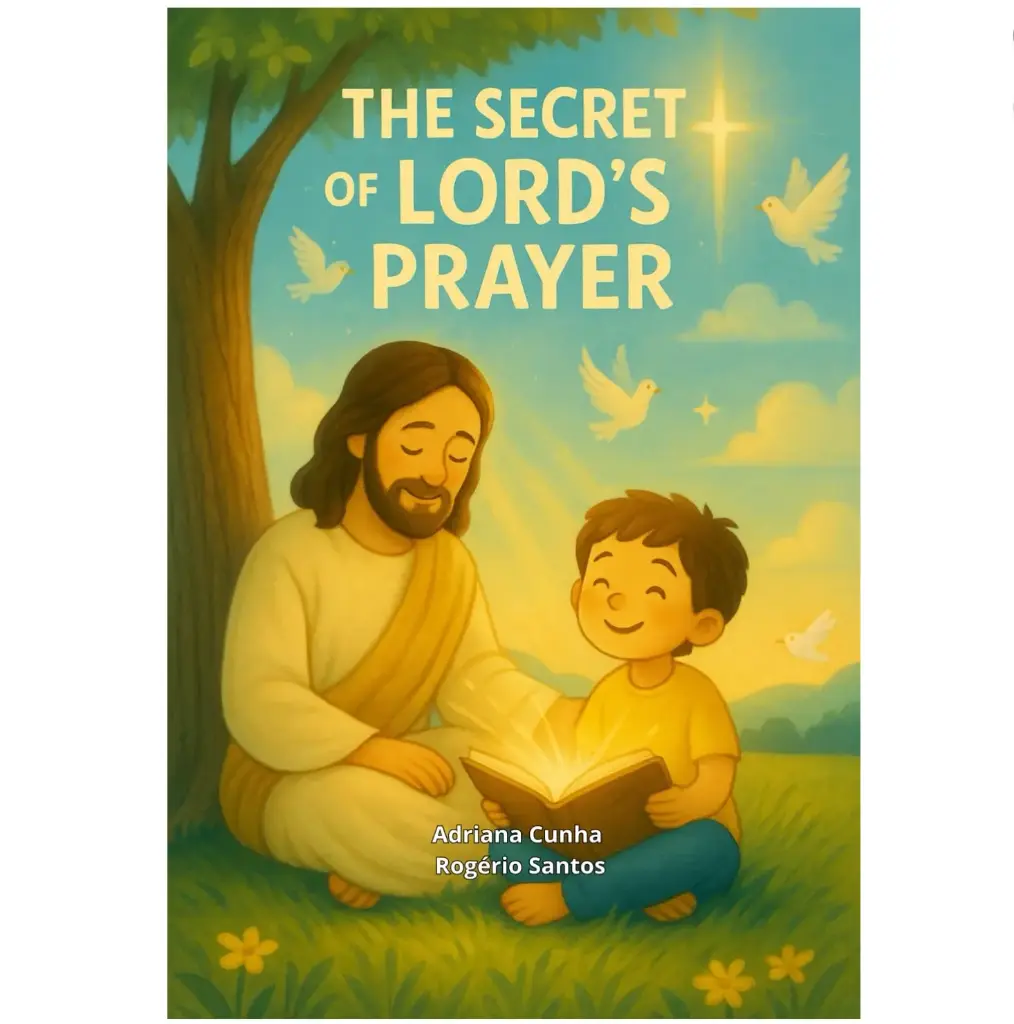
The Secret of the Lord’s Prayer
The Secret of the Lord’s Prayer, by Adriana Cunha and Rogério Santos, offers an illustrated way to explore the prayer with children.
Read it alongside this guide, pausing to discuss unfamiliar words and connect the prayer with your family’s everyday life.
Explore the BookFrequently Asked Questions
How do I explain the Our Father to a five-year-old?
Begin with this: “Jesus taught us a prayer in which we talk to God as our loving Father. We praise Him and ask for food, forgiveness, and help.”
Then explore one phrase at a time, using examples your child understands.
Where is the Lord’s Prayer in the Bible?
It appears in Matthew 6:9–13 and Luke 11:2–4. Matthew contains the longer form, while Luke gives a shorter version after a disciple asks Jesus to teach them to pray.
Does “daily bread” mean we can ask for anything we want?
We can talk honestly to God about our wishes, but this line focuses on what we need. It also reminds us to pray for others and share what we have.
Does forgiving someone mean I have to let them hurt me again?
No. Forgiveness can go alongside boundaries, consequences, and asking for help. Children should never be told to keep harm secret or remain in an unsafe situation in order to be forgiving.
Why do some people finish the prayer differently?
Different Christian traditions use different translations and forms in worship. Some include the closing praise beginning “For thine is the kingdom.” Explain the version your family uses without treating unfamiliar wording as a mistake.
Begin With One Line
Tonight, choose a phrase that connects with your child’s day. Listen to their questions, offer a simple explanation, and pray together.
Understanding can grow gradually through these short conversations.