For parents and children to read together. Read this story together, explore what Jesus teaches about forgiveness, and choose one small way to put it into practice. Pause to explain unfamiliar words and adapt the questions to your child’s age.
Have you ever made a bad choice and wished you could go back and make things right?
Perhaps you disobeyed your parents or said something hurtful to a friend. Afterwards, you wanted to apologise, but wondered, “Will they still love me? Will they give me another chance?”
Jesus told a story about a son who made mistakes, a father who welcomed him home, and an older brother who struggled to join the celebration. Found in Luke 15:11-32, the Parable of the Prodigal Son helps us understand forgiveness, belonging and the heart of God.
It also reveals what we call Kingdom Codes: truths from Jesus’ teaching that we can put into practice every day.
The Story of the Prodigal Son
A father had two sons. One day, the younger son asked for his share of the family’s possessions. He wanted to leave home and live life his own way. The father divided his property between them. Soon afterwards, the younger son gathered everything he had and travelled to a distant country.
At first, life may have seemed exciting. But he spent his money carelessly until nothing remained. Then a severe famine struck the country, and he had nothing to eat. He found work feeding pigs. He became so hungry that he longed to eat their food, but no one gave him anything.
Then he came to his senses. He remembered that even his father’s hired workers had more than enough bread, while he was starving. He decided to return home, admit that he had sinned against God and his father, and ask to be treated as a hired worker. He no longer felt worthy to be called a son. Then he got up and began the journey home.
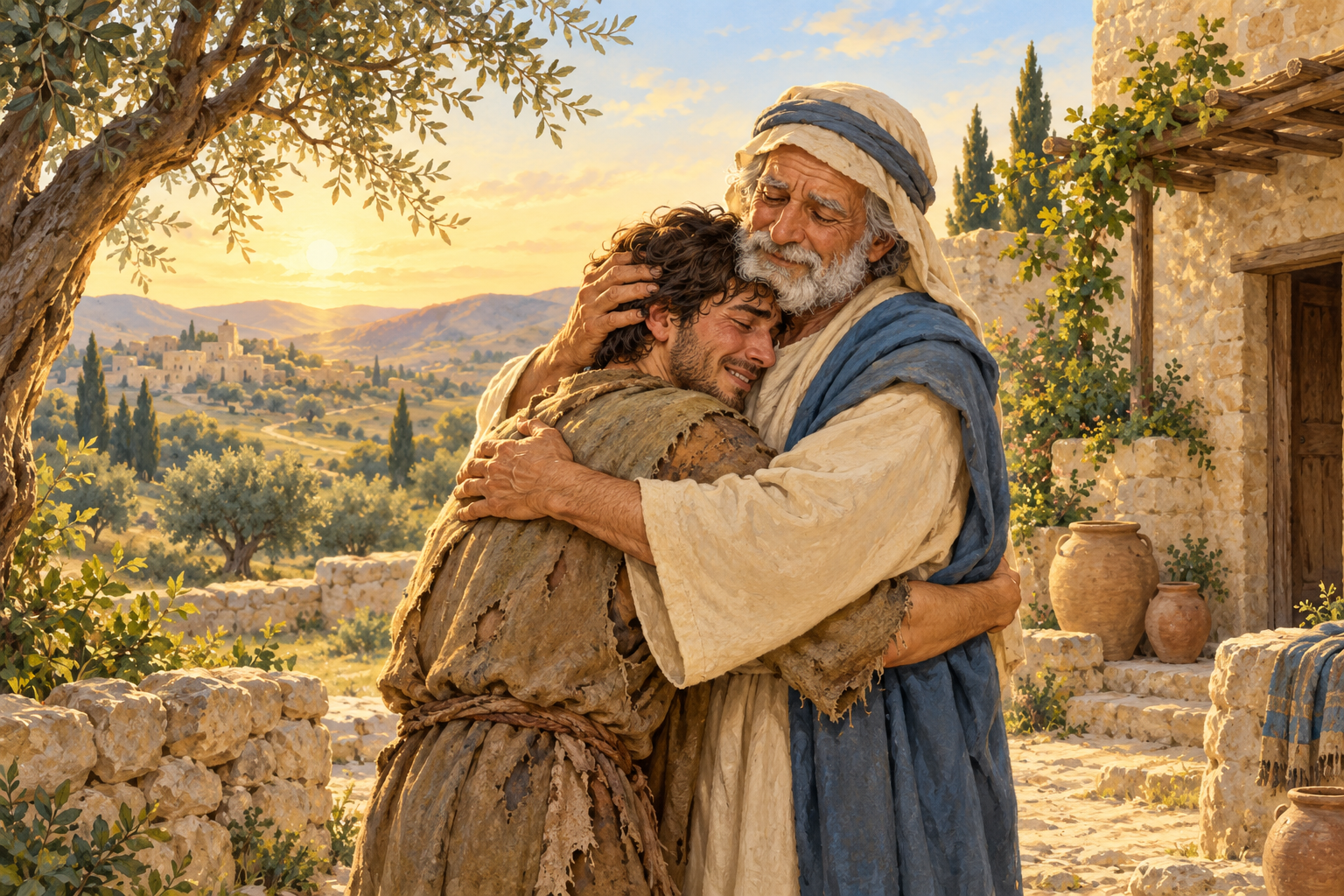
While he was still far away, his father saw him and was filled with compassion. He ran towards his son, embraced him and kissed him.
The son admitted what he had done wrong and said he was no longer worthy to be called his son. But the father told his servants to bring the best robe, a ring and sandals. He ordered a feast to celebrate. His son had been lost, and now he was found.
Meanwhile, the older brother returned from the fields. When he discovered why everyone was celebrating, he became angry and refused to go inside. He had worked faithfully for his father. Why should his younger brother receive such a welcome after wasting everything? The father went out to him too.
He reminded his older son that he was always with him and that everything he had was his. But this was a time to celebrate: his brother had returned.
Jesus leaves the story there. We are not told whether the older brother went inside. We are left to consider what we would do.
Five Kingdom Codes Children Can Practise
1. Your Mistakes Do Not Have to Define You
The younger son had done wrong, and he needed to acknowledge it. Yet his father welcomed him as a beloved son. There is an important difference between saying, “I did something wrong” and believing, “I am worthless.” Taking responsibility helps us grow. Believing we are beyond love can make us hide.
When you make a mistake, tell the truth, ask for forgiveness and do what you can to put things right. You cannot change yesterday, but you can choose your next step.
Kingdom Code: Take responsibility for your choices without forgetting that you are loved by God.
2. Coming Home Begins With Turning Around
The son’s journey home began before he reached his father. It began when he recognised what had gone wrong and decided to return. He did more than feel sorry. He got up and changed direction.
This helps us understand repentance: turning away from what is wrong and turning towards God. For a child, that might mean admitting a lie, returning something taken without permission, or asking for help to change an unkind habit.
The next right step may feel difficult, but you do not have to take it alone. You can ask God and a trusted adult for help.
Kingdom Code: When you recognise a wrong direction, take one step towards what is right.
3. The Father Welcomes Us With Grace
The son planned to ask for a worker’s place. Instead, his father embraced him and celebrated his return. His choices still had consequences. The money was gone, and he had suffered. But his father welcomed him before he could earn anything back.
This helps us understand grace, God’s freely given love and kindness. We cannot purchase it or earn it by keeping a perfect record. Grace does not make wrongdoing unimportant. It gives us hope that we can return, receive forgiveness and begin again.
Kingdom Code: Come to God honestly. You do not have to become perfect before turning towards Him.
4. Recognise the Goodness Already Around You
A further reflection: the son’s memory of home can also prompt a conversation about gratitude. This is a practical application alongside the parable’s central themes of repentance, mercy and welcome.
When the son was hungry, he remembered the bread in his father’s house. What he had left behind began to look different. We can also overlook the good things already in our lives: people who care for us, guidance that protects us, opportunities to learn, and moments we can share.
The father’s generous welcome points us towards God’s goodness. It does not promise that people who love God will always have money, comfort or enough food. Faithful people experience hardship too, and we are called to help those in need.
Children can practise this lesson through gratitude and generosity: notice something good, give thanks for it, and consider how to share it.
Kingdom Code: Appreciate the good you have received, and use it to care for others.
5. Make Room for Someone Else’s Fresh Start
The older brother found the celebration difficult. He could see his brother’s failures, but he struggled to share his father’s joy. We may feel the same when someone who has behaved badly receives another chance. We might think, “What about me? I have been trying to do the right thing.”
The father listened to his older son and reassured him of his place in the family. Welcoming one brother did not mean loving the other less. Forgiveness invites us to stop using someone’s past mistakes as a reason to reject them forever. Rebuilding trust can take time, and forgiveness does not mean accepting continued harm. Children should always tell a trusted adult when someone hurts them.
Kingdom Code: You can value what is right and still celebrate someone choosing to change.
Three Questions to Discuss Together
1. What helped the younger son decide to return home, and why might that first step have been difficult?
2. What did the father’s welcome show his son about love and belonging?
3. Why was the older brother upset? What would you say to help him understand the celebration?
One Practical Action: Take a Step Towards Making Things Right
Invite your child to think privately about one situation they would like to put right. They do not need to share it with the whole family. Perhaps they need to apologise, tell the truth, repair something they damaged, or ask a trusted adult for help.
Encourage them to choose one manageable action today. They might say:
• “I am sorry I hurt you. How can I help put it right?”
• “I need to tell you what really happened.”
• “Can you help me make a better choice?”
You can also pray together:
“Heavenly Father, thank You for loving us. Help us recognise when we have done wrong, find the courage to return to You, and treat others with mercy. Show us the next right step. Amen.”
The purpose is to help children practise honesty and responsibility while knowing they are loved.
Explore the Story Through an Illustrated Book

The Secret of the Father’s Love
Explore forgiveness, belonging and coming home through an illustrated story to read together.
Retold in simple language, this book invites families to continue the conversation about the Prodigal Son.
Explore the BookThe Kingdom Code to Remember
Both sons needed their father’s love. One needed the courage to return and receive it. The other was invited to extend that welcome to his brother. We can recognise ourselves in each of them.
When you do wrong, tell the truth and turn towards home. When someone else returns, make room for their fresh start.
There is joy in coming home and joy in helping someone else feel welcome at the table.