Christmas preparations can be exciting for children: lights, songs, decorations and the anticipation of presents. Advent also gives families time to explore why Christians celebrate Jesus’ birth, through small moments of prayer, kindness and creativity.
These five simple Advent activities for kids use everyday materials and take about 3–15 minutes each. Most suit children aged 4–10, with help for younger children. Choose one to try today, or use the ideas to make a flexible family Advent calendar.
What Is Advent? A Simple Explanation for Children
In many Western Christian traditions, Advent begins on the fourth Sunday before Christmas. It is a season of preparation for celebrating Jesus’ birth and looking forward to His coming again. It includes four Sundays, but is not always exactly four weeks long.
You might explain it to a child like this: “Advent is a time to get ready to celebrate Jesus’ birth. We can prepare by praying, listening to His story and caring for other people.”
The word Advent comes from a Latin word meaning “coming”. Preparing our hearts does not mean earning God’s love or being perfectly behaved. It means making room to notice that love and respond to it. Families who would like more background can read the USCCB’s explanation of Advent.
1. Make a Kindness Countdown
Best for: Ages 4–10
Time: 5–10 minutes to prepare, then a few minutes for each action
Materials: Paper and crayons or a pencil
Draw five large stars. Let your child suggest one manageable act of kindness for each star, and write or draw it inside. You could:
- Help set the table.
- Draw a picture for someone who would enjoy it.
- Invite someone to join a game.
- Say something encouraging to a friend.
- Help a family member with a small task.
Put the sheet somewhere easy to see. After trying an action, your child can colour its star. Talk about the person they helped: “What did you notice? How might that have made their day easier?”
Use the stars to remember shared experiences, rather than score behaviour. If an action does not work out, adapt it or try another day. Children can receive kindness as well as offer it.
Ask together: “What is one kind thing we could do today?”
2. Share a Short Advent Prayer
Best for: All ages, with adult support
Time: 3–5 minutes
Materials: None
Choose a familiar moment, such as after dinner or before bed. Invite each person to name something they are thankful for, or someone they would like to pray for. A child can listen quietly if they prefer.
Dear Jesus,
Thank You for coming into the world.
Help us prepare our hearts for Christmas.
Teach us to be kind, patient and generous.
Help us notice people who need care,
and share Your joy and peace.
Amen.
Leave room for your child’s own words. Prayer can include a worry or a question as well as thanks; it does not need to sound polished.
Ask together: “What would you like to tell Jesus today?”
For another mealtime conversation, try our daily bread lesson about gratitude, needs and sharing.
3. Read the Christmas Story in Five Short Parts
Best for: Ages 4–10
Time: 5–10 minutes per reading
Materials: A Bible or an age-appropriate children’s Bible
Explore one part of the Nativity story at a time. Read a short passage aloud, or use a faithful children’s retelling. You can spread these readings across five days or several weeks:
- The angel visits Mary — Luke 1:26–38. Talk about Mary’s question and her trust in God.
- Joseph receives reassurance — Matthew 1:18–25. Talk about Joseph’s decision to care for Mary and the child.
- The journey to Bethlehem — Luke 2:1–5. Ask what children notice about why Mary and Joseph travel.
- Jesus is born — Luke 2:6–7. Explain that a manger is a feeding trough for animals.
- The shepherds hear the news — Luke 2:8–20. Notice how the shepherds respond and share what they have heard.
Let children retell a scene with drawings or toys. When imagining what a character might have felt, make clear that you are wondering together rather than adding facts to the Bible story.
Ask together: “What surprised you in this part of the story?”
You can explore the manger further in Why Was Jesus Laid in a Manger?
4. Colour or Draw a Nativity Scene
Best for: Ages 3–10
Time: 10–15 minutes
Materials: Paper and crayons, or a Nativity colouring page you already have
Invite your child to draw Mary, Joseph and baby Jesus, or colour a suitable page. A purchased book is optional: a simple drawing works too.
As you sit together, ask one gentle question: “Where is Jesus resting?” or “How do you imagine Mary and Joseph cared for Him?” Follow your child’s interest, and leave space for quiet colouring.
Talk about how Christians see God’s love in Jesus’ birth. Expensive presents and perfect decorations are not needed to care for one another. Your child might add a small heart as their own symbol of love, then choose where to display the picture.
Ask together: “How could we show someone care this week?”
5. Create a Paper Star of Hope
Best for: Ages 4–10
Time: About 10 minutes
Materials: Paper and crayons; scissors are optional, with adult help
Matthew 2:1–12 tells of the wise men, or Magi, following a star and visiting Jesus. This is a different scene from the shepherds’ visit in Luke: Matthew describes the Magi entering a house. You can read it later as your family continues the Christmas story.
Draw a large star and invite your child to decorate it. Inside, help them write or draw a message such as “God loves us”, “Jesus brings hope” or “We can care for one another”. Younger children can choose the words while an adult writes.
Display the star near your family’s Nativity scene or prayer space. Explain that your paper star is a reminder of hope; it is not something you need to make or display perfectly.
Ask together: “Who helps you feel loved, especially on a difficult day?”
Turn These Ideas Into a Simple Family Advent Calendar
You do not need 24 different crafts. Draw a calendar on paper, or write activities on slips to open together. Many family countdown calendars run from 1–24 December; that is a convenient household tradition, while the church season of Advent begins on a Sunday whose date varies.
Rotate the five ideas: a kindness action, a short prayer, one Bible reading, a drawing and a star. Repeat favourite activities, continue the five-part story and leave some days free. On Christmas Eve, you might read Luke 2:6–7 again and thank God together.
If a daily calendar feels too much, choose one activity each week and save the fifth for Christmas Eve. Starting late or missing a day does not spoil the experience.
Questions Families May Ask
What are easy Advent activities for preschoolers?
Try a one-sentence prayer, a short story, drawing a star or helping put napkins on the table. Keep activities brief and let your child participate in a way that suits them.
Do we need special materials or a colouring book?
No. Paper, crayons and a Bible are enough for these ideas, and prayer or kindness may need no materials at all. Children can draw their own Nativity scene.
When should we start our Advent calendar?
You can follow your church’s Advent dates or use a 1–24 December family countdown. Choose what helps you make time together, and explain the difference simply if your child asks.
What if my child is mostly excited about presents?
Enjoying presents does not prevent a child from learning about Jesus. Welcome their excitement and make room alongside it for a story, a prayer or a kind action. Avoid making gratitude a test they must pass.
Explore the Nativity With The Miracle of Christmas
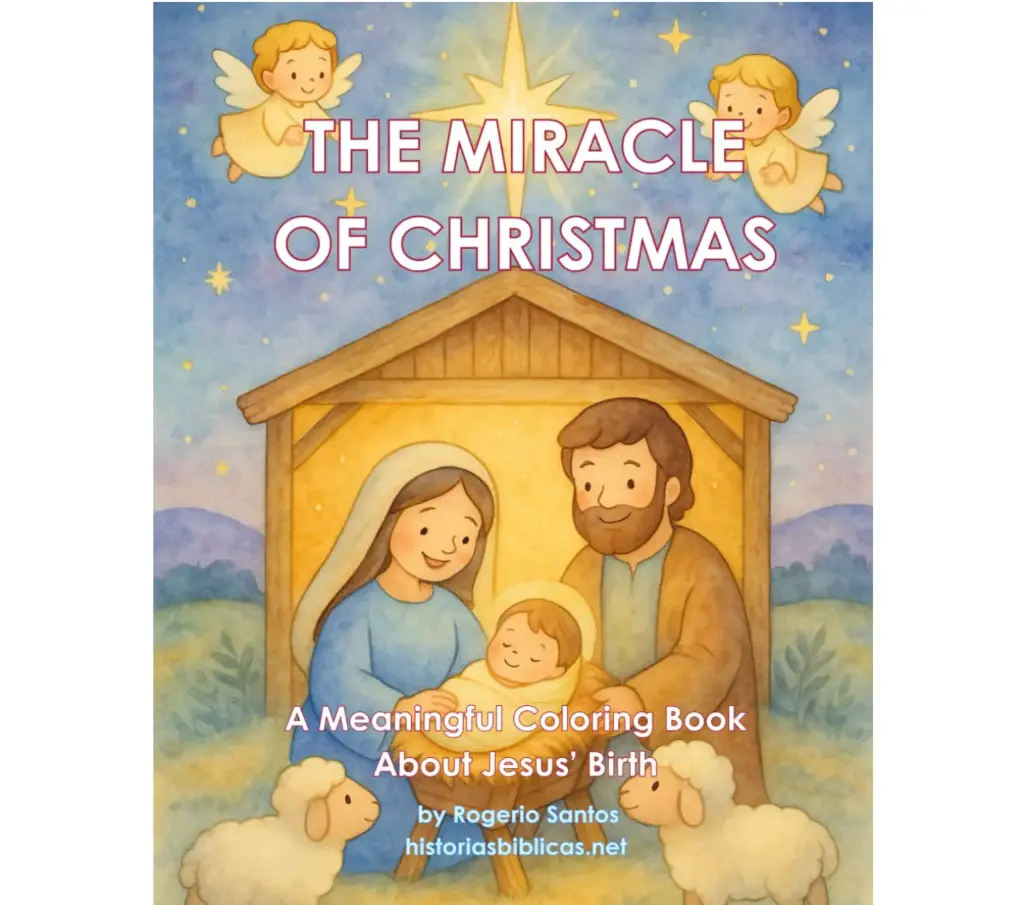
The Miracle of Christmas
The Miracle of Christmas: A Meaningful Coloring Book About Jesus’ Birth combines Nativity illustrations to colour, simple story text and questions for reflection. It offers an optional companion for families who enjoy exploring the Christmas story through colouring and conversation.
Choose a page together, read its text and let your child talk about what they notice.
Explore the BookBegin With One Small Moment
Choose one activity that fits your family today. Listen to your child’s questions, enjoy their ideas and leave room to adapt. A short story, a shared prayer or a small act of kindness can help children connect their Christmas preparations with Jesus’ birth and the care they give and receive.