“What am I getting for Christmas?” If you have children, you have probably heard that question. The lights, food and wrapped presents can be exciting, and enjoying them does not prevent children from learning to give.
For Christians, Christmas celebrates Jesus’ birth and God’s love for the world. These seven Christmas kindness activities help children connect that celebration with practical care for others. Most suit ages 4–10 with adult support, take 5–20 minutes and use things you already have. Choose one that fits your family today.
How Does the Christmas Story Connect With Giving?
Luke 2:1–20 describes the journey to Bethlehem, Jesus being laid in a manger and the shepherds hearing and sharing the good news. Matthew 2:1–12 tells of the wise men, or Magi, honouring Jesus with gold, frankincense and myrrh. Matthew describes them entering a house; their visit is a separate scene from Luke’s account of the shepherds.
These passages invite Christians to reflect on care, joy and worship. The activities below are ways to respond to those themes today, rather than instructions given in the Nativity story.
You might tell your child: “At Christmas, we celebrate Jesus’ birth and remember God’s love. We can respond by caring for other people.”
For a family reading, begin with Why Was Jesus Laid in a Manger?
1. Give Someone Your Time and Attention
Time: 10–15 minutes. Cost: Free.
Mary and Joseph’s care for Jesus gives families a starting point for talking about being present for one another. Invite your child to choose someone they would enjoy spending time with, then agree on an activity together.
- Read a favourite story with a grandparent.
- Play a game with a sibling.
- Help prepare a simple meal with an adult.
- Call a relative who lives far away.
Put distractions aside for a few minutes and follow the other person’s interests. Check that the time and activity suit them too.
Ask: “Who would you like to spend time with, and what might you enjoy together?”
The lesson: Attention can be a thoughtful gift, even when we have no money to spend.
2. Make a Card That Helps Someone Feel Remembered
Time: About 10 minutes. Materials: Paper and crayons or coloured pencils.
The angels’ message of joy can prompt a conversation about sharing encouragement. Think of someone your family knows who might enjoy a message: a relative, neighbour, teacher or friend.
Invite your child to draw a star, a heart or a Nativity scene. Add a personal sentence such as “I enjoyed reading with you” or “Thinking of you this Christmas”. An adult can write down a younger child’s words and help deliver the card.
You do not need to label someone as lonely or assume how they feel. A thoughtful message can simply show that you remembered them.
Ask: “What would you like this person to know?”
The lesson: A few sincere words can communicate care.
3. Choose Something Suitable to Share
Time: 10–20 minutes. Cost: No new purchase needed.
The manger can help families talk about the difference between possessions and a person’s worth. Generosity begins by noticing what we can share, rather than judging people by what they own.
Look through books, toys or games together. Let your child choose an item in good condition that they are ready to pass on. Keep favourite possessions out of the discussion unless your child volunteers them.
Before donating, an adult should check what the charity or community group currently accepts. Clean the item, check that its pieces are complete and follow the organisation’s instructions. An unwanted or broken item is not automatically a useful gift.
If donating feels too difficult today, offer a smaller choice: share a game during a visit or lend a book with an agreed return date.
Ask: “What could we share that someone else would find useful or enjoyable?”
The lesson: Giving involves both a willing choice and attention to the recipient’s needs.
4. Offer a Pair of Helping Hands
Time: 5–15 minutes. Cost: Free.
Joseph’s response to God’s message in Matthew 1:18–25 offers a way to discuss responsibility and care. At home, children can practise care through one manageable task.
- Put napkins on the dinner table.
- Help tidy a shared play space.
- Water a plant with guidance.
- Help wrap a present.
- Offer to put away toys with a sibling.
Choose a task that suits your child’s abilities and ask before helping with someone else’s belongings. Work alongside them if needed. Afterwards, name the practical difference: “Now we have a clear space to play together.”
Ask: “What could we do to make someone’s day a little easier?”
The lesson: Ordinary help can express love.
5. Help Someone Feel Included
Time: 5–10 minutes to plan. Cost: Free or low-cost.
The shepherds heard the good news while watching their sheep. Their part in the story gives families a chance to reflect on welcome and belonging.
Invite your child to suggest a simple way to include someone: ask a classmate to join a game, greet a new family at church or invite a relative to a family activity. Adults should arrange visits and invitations.
Offer a welcome without pressure. Not everyone celebrates Christmas, wants to join a particular activity or feels comfortable in a large group. Ask what would suit them and respect their answer.
Ask: “How could we make it easier for someone to join in if they would like to?”
The lesson: Inclusion means offering a place while respecting another person’s choices.
6. Draw a Gift From the Heart
Time: 10–15 minutes. Materials: Paper and crayons.
The wise men’s gifts honoured Jesus. Their story can help children think about the thought behind a gift, without suggesting that they must offer something expensive.
Ask: “How could we show love as we celebrate Jesus’ birth?” Invite your child to draw an answer. A heart might represent care, children playing together might represent welcome, or helping hands might represent generosity.
Add the heading “My Christmas Gift of Love”. Then choose one small action that connects with the drawing. A picture of friendship could lead to inviting someone into a game; a picture of helping could lead to a shared task.
Explain that the drawing is your child’s own response to the story. Kind actions do not earn God’s love, and an imperfect day does not take that love away.
Ask: “What could we do that matches your picture?”
The lesson: Thoughtfulness matters more than a price tag.
7. Make a Family Kindness Jar
Time: About 10 minutes to prepare. Materials: A small box or an unbreakable container, paper and a pencil.
Write simple actions on slips of paper: thank someone, make a card, help with a task, pray for someone or invite someone to play. Let everyone suggest ideas, and include actions adults can do for children too.
Choose a slip when your family has time. Decide together how to try it, or swap it if it does not fit the day. Younger children can draw symbols instead of writing; an adult can help with cutting paper.
Use the jar to notice care given and received. Avoid prizes for collecting the most slips or treating missed activities as failures.
Ask: “What did we notice when we tried that? Was it helpful, or could we do it differently?”
The lesson: Generosity can become a shared family habit.
A Flexible Seven-Day Giving Challenge
Try one idea a day, spread them across Advent or choose only two favourites. Replace the need to tick every box with a short conversation about what you noticed.
| Day | Idea to try | Talk about it |
| 1 | Spend time together | What did the other person enjoy? |
| 2 | Make an encouraging card | What did you want to say? |
| 3 | Choose something to share | Was it suitable and useful? |
| 4 | Help with a task | How did it help? |
| 5 | Offer a welcome | What did the person choose? |
| 6 | Draw a gift of love | What action fits your picture? |
| 7 | Start a kindness jar | Which idea would you repeat? |
For a wider mix of prayer, Bible reading and creativity, explore our five simple Advent activities for kids.
Teach Generosity Without Guilt
Children can enjoy receiving presents and learn to care for others. Avoid calling them selfish for wanting a toy, comparing their circumstances with another child’s, or forcing them to give away a treasured possession.
Offer choices, model giving yourself and notice the recipient’s needs. Receiving help is part of family and community life too; nobody has to buy or donate something to belong.
Keep the focus on relationships rather than praise or performance. “You noticed she needed help” is more useful than judging who was the most generous. For another conversation about needs and sharing, read our daily bread lesson in gratitude.
A Short Christmas Prayer About Giving
Dear Jesus,
Thank You for coming into the world.
Help us notice the care we receive and the care we can give.
Teach us to share our time, encouragement and helping hands.
Show our family one way to love someone today.
Amen.
Questions Families May Ask
How do I teach generosity to a five-year-old?
Offer two simple choices, such as drawing a card or helping set the table. Do the activity together and talk briefly about how it helped. Keep sharing voluntary and appropriate to the child’s age.
Is it wrong for children to want Christmas presents?
No. You can welcome their excitement while making room for gratitude and giving. Generosity is something to practise together, not a test children must pass before receiving a gift.
How can we give when money is tight?
Share time, encouragement or practical help. A conversation, a drawing or a welcoming invitation can matter. Choose what fits your family’s resources; there is no need to spend money.
What if an activity does not go as planned?
Adapt it, ask for help or try another day. A recipient may decline, and that is fine. Listening to what someone actually wants is part of learning to give thoughtfully.
Explore the Nativity With The Miracle of Christmas
The Miracle of Christmas
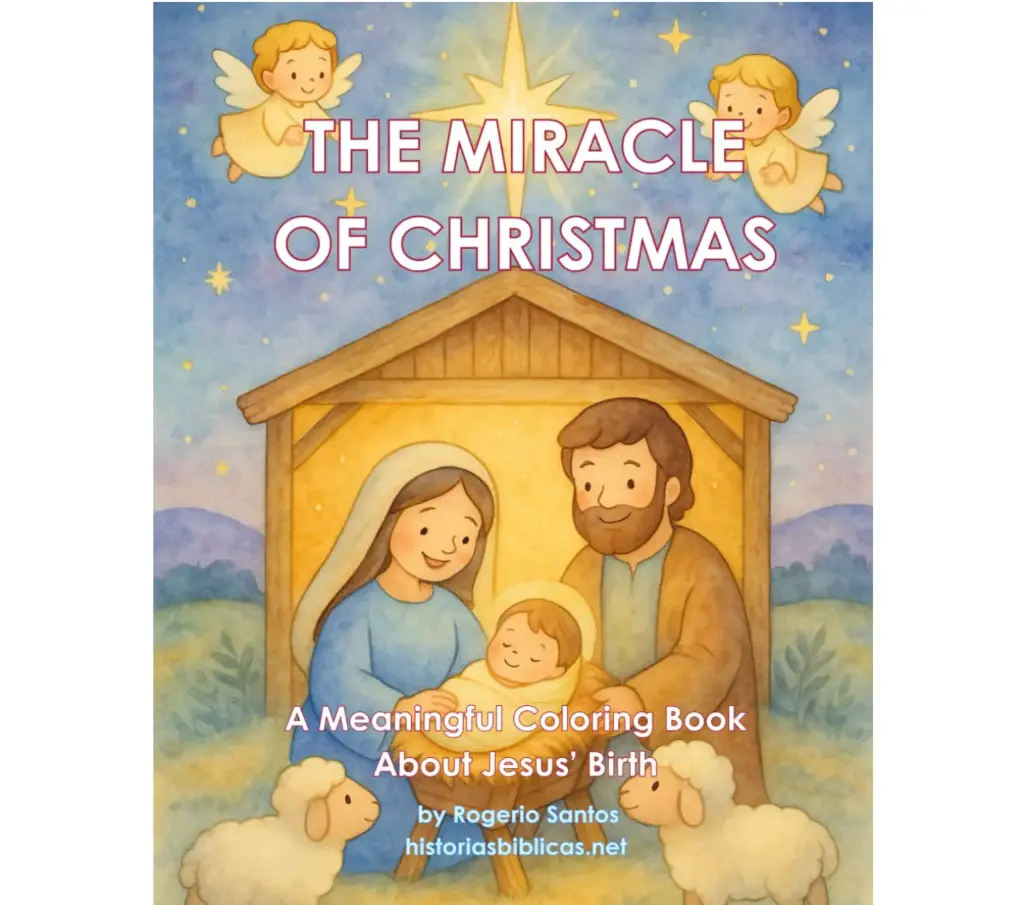
The Miracle of Christmas: A Meaningful Coloring Book About Jesus’ Birth combines Nativity illustrations to colour, simple story text and questions for reflection. It offers an optional companion for families who enjoy exploring the Christmas story through colouring and conversation.
Choose a page together, read its text and let your child talk about what they notice.
Begin With One Act of Care
You do not have to choose between Christmas presents and generosity. Enjoy your family’s celebrations, share the story of Jesus’ birth and choose one practical way to care for someone. Start small and let your child help decide.