You want to pray with your children, but bedtime is running late. Someone needs water, someone cannot find a favourite toy, and everyone is tired.
Family prayer can begin with five ordinary minutes. You do not need special materials or children who know every word. Choose a familiar moment, thank God, pray for someone and finish with one small act of kindness to practise.
This guide offers a flexible routine for Christian families, with an optional Hail Mary for Catholic families. Adapt it to your children’s ages, needs and your own church tradition.
Why Start a Family Prayer Routine?
A familiar routine gives children opportunities to bring everyday life to God: a happy afternoon, a difficult friendship, a worry or someone they love. Parents can model gratitude, honesty and care for others by joining in themselves.
Prayer includes speaking and listening to God, praising Him, asking for help and sometimes simply being quiet in His presence. Learning traditional prayers can be part of that relationship, alongside praying in your own words.
A Five-Minute Family Prayer Routine
Try this after dinner or before the bedtime rush. The timings are a guide, not a stopwatch. Larger families may need longer; toddlers may need only a minute or two. Choose one short contribution each, and leave longer conversations for afterwards.
Minute 1: Gather and Begin
Sit around the table, beside a bed or on the sofa. Invite everyone to pause: “Let’s take a few minutes to pray together.” Catholic families may begin with the Sign of the Cross.
Dear God, thank You for being with us today. Help us listen and pray together.
Children can sit comfortably or hold a familiar object. Stillness is not a test they must pass before they can pray.
Minute 2: Thank God for One Thing
Ask: “What are you thankful for today?” A friend, Grandma, a pet or pizza can all be starting points. Share your own answer too: “I’m thankful we had time together.”
Thank You, God, for these gifts and for the people who care for us.
If the day was difficult, allow an honest answer. Your child does not have to pretend to feel happy or find a positive side to everything.
Minute 3: Pray for Someone
Ask: “Who would you like us to pray for?” Perhaps a friend feels lonely, a relative is unwell or someone needs encouragement.
Dear God, please give them comfort, strength and the help they need. Show us how we can care for them too.
Praying for someone else is called intercession. Explain that prayer goes alongside practical care; it does not promise that every difficulty will disappear.
Minute 4: Say a Familiar Prayer
The Our Father, or Lord’s Prayer, is the prayer Jesus taught His followers (Matthew 6:9–13; Luke 11:2–4). It turns our attention to God and brings Him our needs, including food, forgiveness and guidance.
Catholic families may also choose the Hail Mary, which honours Mary as Jesus’ mother and asks her to pray for us. Catholics worship God alone and can always pray directly to Him.
Choose one prayer tonight. A parent can lead while children join in with the words they know. Other Christian families can use the Lord’s Prayer or another prayer from their tradition.
For explanations to explore outside this short routine, see the Lord’s Prayer for kids, line by line and our Hail Mary guide for children.
Minute 5: Choose One Loving Action and Finish
Ask: “What is one kind thing we could do tomorrow?” Choose something small: include someone in a game, thank a teacher, help a sibling or send an encouraging message with an adult’s help.
Dear Jesus, help us carry Your love into tomorrow. Teach us to be patient, honest and caring. Amen.
The action can happen later. It is a way to live out the prayer, not something children must do to earn God’s love.
Your Prayer Plan at a Glance
- Gather: “God, thank You for being with us.”
- Give thanks: “What are you thankful for today?”
- Pray for someone: “Who needs our prayers?”
- Say a familiar prayer: the Our Father, or the Hail Mary in Catholic family prayer.
- Choose kindness: “How can we show love tomorrow?” Finish with Amen.
If a child shares something important, listen rather than rushing to finish. On another evening, a two-minute prayer may be enough.
Adapt the Routine to Your Children
These ages are suggestions, not milestones. Adjust the language, length and sensory environment to each child.
Ages 2–4: Begin With a Minute or Two
Invite your child to name something they love, listen to a short prayer and join in with “Amen”. A favourite toy can sit beside them.
Dear God, thank You for our family. Thank You for loving us. Amen.
Warmth and familiarity matter more than reciting a long prayer.
Ages 5–7: Offer Simple Choices
Let your child choose someone to pray for or lead the thank-you sentence. Ask one question, such as “What made you happy?” or “Was anything difficult?”
Explain unfamiliar words briefly. For example: “Daily bread reminds us to ask God for the food and other things we need today, and to remember other people’s needs too.” You can return to the daily bread lesson on gratitude and sharing another day.
Ages 8–12: Make Room for Reflection
Older children may enjoy leading a prayer, writing one in a notebook or choosing a short Bible passage. Use a reading in place of another step if you want to keep the routine brief.
Invite questions without requiring personal disclosures. A child can name a concern silently or simply listen. When discussing forgiveness, explain that it can go alongside boundaries and asking a trusted adult for help.
When Prayer Does Not Go to Plan
What if my child gets distracted?
Movement, laughter and unexpected questions are common. Gently invite your child back: “Let’s finish our prayer together.” Let them change position, reduce distractions or shorten the routine when they are tired.
Some children participate more comfortably while holding an object or moving gently. Look for ways to include them without making stillness the goal.
What if my child does not want to pray?
Avoid turning prayer into a punishment or a battle. Say, “You’re welcome to listen tonight.” They might prefer to choose whom you pray for or join in with Amen. Ask about their feelings later, without pressure.
What if we miss a day?
Begin again at the next suitable moment. There is no need to double the time or make up missed evenings. Pick an existing daily cue, such as finishing dinner, to help you remember.
A Simple Seven-Day Starter Plan
Keep the same short routine and choose one of these prompts each day. Start on any day of the week.
- Monday — Gratitude: What are you thankful for today?
- Tuesday — Kindness: Who could use some encouragement?
- Wednesday — Trust: Is there a worry you would like to bring to God, aloud or silently?
- Thursday — Forgiveness: Is there an unkind choice we can put right?
- Friday — Family: Who would we like to remember in prayer?
- Saturday — Helping: What is one caring thing we can do?
- Sunday — Reflection: What would we like to thank God for from this week?
Do not use the questions to make children confess mistakes in front of others. Parents can model reflection through their own words and actions.
Questions Families Often Ask
What is the best time for family prayer?
Choose a moment you can usually manage: after dinner, before school or early in the bedtime routine. If everyone is exhausted at bedtime, try an earlier time.
Should children memorise traditional prayers?
Memorisation can help children join in family and church prayer. Teach the meaning gradually too, using one phrase and one everyday example at a time.
Can we say both the Our Father and Hail Mary?
Yes, if that suits your Catholic family’s pace. You can also alternate them to leave time for thanksgiving and personal prayer. Five minutes is a starting point, not a requirement.
Do we need a prayer corner or special materials?
No. A comfortable place is enough. A Bible or familiar prayer book can help, but you can begin with your own words tonight.
Explore the Prayers Through Stories
These illustrated books by Adriana Cunha and Rogério Santos can support a separate reading time, helping children explore the words they hear during family prayer.
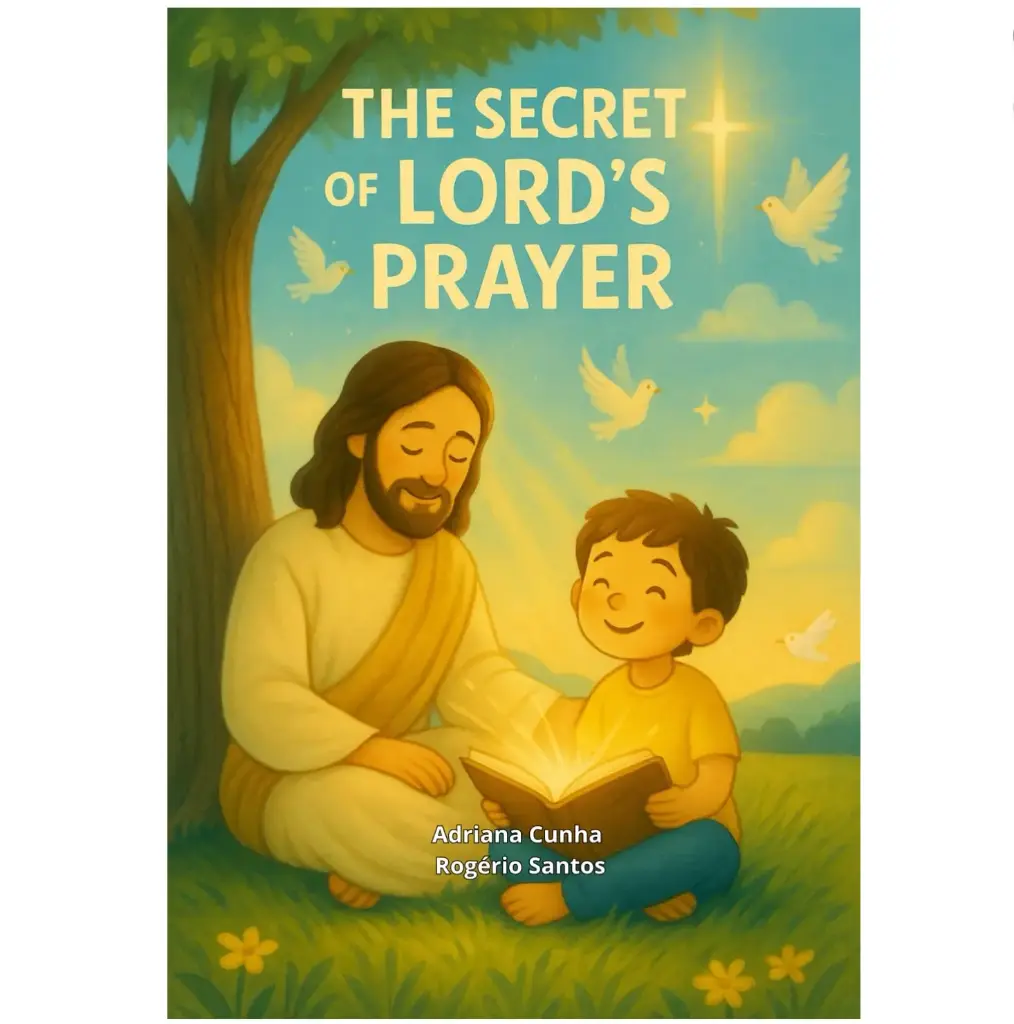
The Secret of the Lord’s Prayer
Explore the prayer Jesus taught through an illustrated story. Read together and pause to connect its words with gratitude, forgiveness and everyday family life.
Explore the Lord’s Prayer Book

The Secret of the Hail Mary Prayer
An illustrated introduction to the Hail Mary for children. Use the story to begin gentle conversations about Mary, prayer and living with faith and kindness.
Begin With One Small Moment Tonight
Choose a time, gather together, thank God for one thing and pray for someone. Add a familiar prayer and one kind action if your children are ready.
Let the routine grow with your family. You can start simply and return tomorrow.